
Stone
Guide to Landscaping Stone: 57 Stone, Crush and Run, and How to Calculate What You Need
Nov
You’re Standing in Your Yard, Staring at a Drainage Problem
The rain stopped two hours ago, but there’s still a small lake forming along your foundation. Or maybe your gravel driveway has turned into a rutted mess after another Johnston County downpour. You know you need stone — but when you start searching, you’re hit with terms like 57 stone, crusher run, #4 gravel, and a dozen other options that all look the same in photos. You just want to know what to buy, how much you need, and where to get it without overpaying.
That confusion is exactly why we put this guide together. Whether you’re a homeowner tackling your first drainage project or a landscaper quoting a new build, understanding the difference between 57 stone and crush and run — and knowing how to calculate quantities accurately — will save you time, money, and a second trip to the supply yard.
What Exactly Is 57 Stone?
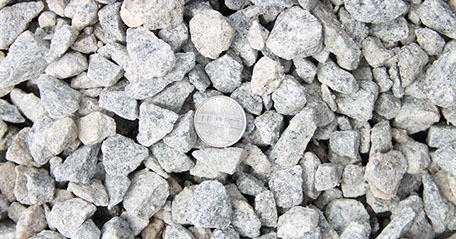
The name sounds oddly specific, and it is. 57 stone refers to a size classification from the American Society for Testing and Materials (ASTM). It’s a washed granite gravel, typically ¾-inch to 1-inch in diameter, with angular edges that naturally interlock when placed. That angular shape is what gives it stability without requiring compaction.
Key Insight: 57 stone does NOT compact into a solid surface. It remains loose and permeable, which is precisely why it excels at drainage applications.
Because it’s open-graded — meaning there are gaps between the individual stones — water passes through it freely. That natural gray color also works well with most landscape designs, blending into the background rather than competing with your plantings or hardscape.
If you’ve ever seen a French drain installation, the gravel surrounding the perforated pipe is almost always 57 stone. It lets water flow to the pipe while keeping soil and sediment out.
Where 57 Stone Shines in Local Projects
Anyone who has dug more than six inches into a yard in Johnston County or Wake County knows the reality: NC clay soils drain poorly. Water sits. It pools. It finds your basement. That’s what makes 57 stone such a workhorse material in this region.
You’ll find it used in French drains and foundation drainage systems, as a surface layer on gravel driveways, as backfill behind retaining walls where hydrostatic pressure is a concern, in septic drain fields, along slopes for erosion control, and on casual garden pathways where you want permeability. In every one of these applications, the goal is the same — let water move through instead of pooling on top.
Crush and Run: The Compaction King
If 57 stone is all about drainage, crush and run (also called crusher run) is all about stability. It’s a blend of crushed stone and fine stone dust that, when compacted with a plate compactor or roller, locks together into a remarkably firm surface.
Think of it this way: 57 stone is the gravel you walk on. Crush and run is the base you build with.
That blend of coarse and fine particles is what makes the difference. The fines fill the gaps between the larger pieces, and once you add moisture and compaction, the whole layer becomes almost concrete-like in its firmness. It won’t shift under load, and it provides a level, stable platform for whatever you’re building on top.
Best Uses for Crush and Run
Crush and run is the material of choice for driveway base layers, patio and paver sub-bases, shed and outbuilding foundations, compacted walkways where you want a solid surface, and grading or leveling uneven ground before construction.
Here’s a pro tip that experienced landscapers already know: the best driveways use both materials. A compacted layer of crush and run as the base, topped with 57 stone as the surface layer, gives you the structural integrity you need underneath and the drainage and clean appearance you want on top.
How to Calculate the Amount of Stone You Actually Need
This is where most DIY homeowners either over-order (expensive) or under-order (frustrating). The math isn’t complicated, but you need to follow it carefully.
Start with your measurements. Grab a tape measure and record the length and width of your project area in feet. Then decide on depth. For a garden pathway, 2 to 3 inches is typically sufficient. For a driveway, plan on 4 to 6 inches. For heavy-duty applications like a shed foundation or commercial parking area, go 6 to 8 inches.
Convert depth to feet. This is the step people forget. Four inches isn’t 4 — it’s 0.33 feet (4 divided by 12).
Multiply length × width × depth (in feet) to get your total in cubic feet. Then divide that number by 27 to convert to cubic yards, since bulk landscaping stone is sold by the cubic yard.
A Real-World Example
Say you’re resurfacing a section of your driveway that measures 20 feet long by 10 feet wide, and you want a 4-inch layer of 57 stone.
That’s 20 × 10 × 0.33 = 66 cubic feet. Divide by 27 and you get roughly 2.5 cubic yards. Now add a 10% buffer for compaction settling and minor waste, and you’re looking at approximately 2.75 cubic yards.
Worth noting: One cubic yard of gravel weighs approximately 1.4 tons. So that 2.75-yard order is close to 3,850 pounds of material. This is not a “throw it in the truck bed” situation for most people — which is where delivery service becomes your best friend.
If the math feels uncertain for your specific project, call the team at Red Barn Mulch at (919) 553-6626. They calculate material estimates for homeowners and contractors every day, and they’ll make sure you’re ordering the right product in the right quantity.
Why Johnston County and Wake County Contractors and Homeowners Trust Red Barn Mulch
Red Barn Mulch isn’t a big-box retailer with a teenager guessing at your material needs. It’s a 100% family-owned operation — a branch of Bobby Hardee Landscaping — located at 2019 Hardee Ln, Clayton, NC 27520. They’re the largest mulch distributor in Johnston County, and they carry a full range of bulk landscaping stone and aggregate materials alongside their mulch products.
Their #5 River Rock Beige at $90.00 per yard is one example of the competitively priced decorative stone they keep in stock. For aggregate materials like 57 stone and crush and run, they offer the same bulk pricing advantage that makes buying from a dedicated supply yard far more economical than hauling bags from a hardware store.
Consider this: A single 0.5-cubic-foot bag of gravel from a big-box store costs $4–$6. You’d need roughly 54 bags to equal one cubic yard. At $4 each, that’s $216 per yard — before you factor in the time spent loading and unloading all those bags. Buying bulk from a local supplier like Red Barn Mulch cuts that cost dramatically.
They also offer a delivery service for $30–$75, which means your material shows up in your driveway ready to spread. For projects requiring several yards of stone, that delivery fee pays for itself in saved time and saved suspension components on your vehicle.
The staff at Red Barn Mulch understands the specific soil and drainage challenges that come with building in central North Carolina. They can help you choose between 57 stone, crush and run, river rock, or another material based on what your project actually demands — not just what’s most expensive.
The Difference Between a Project That Lasts and One You Redo Next Year
Choosing the right landscaping stone isn’t glamorous, but it’s the foundation — literally — of every driveway, patio, drainage system, and walkway you’ll build. Use 57 stone where you need water to move. Use crush and run where you need the ground to stay put. Measure carefully, calculate honestly, and add that 10% buffer so you’re not making a second trip.
If you’re planning a project in Johnston County or Wake County this season, reach out to Red Barn Mulch before you start. Call (919) 553-6626 or visit redbarnmulch.com to talk through your material needs, get a quantity estimate, and schedule delivery. The right stone, ordered correctly the first time, is the difference between a project you’re proud of and one you’re patching next spring.
